

Inflammatory bowel disease (IBD) is a group of chronic diseases that causes the gastrointestinal (GI) tract to become inflamed (irritation and swelling). The main types of IBD are ulcerative colitis and Crohn's disease.
Individuals with IBD are more at risk for complications such as colon cancer, arthritis, blood clots, and kidney stones.
Symptoms
Symptoms of IBD include lower abdominal pain, weight loss, chronic diarrhea, rectal bleeding, fatigue, and nausea.
Cause
IBD is an autoimmune disorder, which means that it occurs because the body’s immune system attacks healthy tissues in the GI tract, leading to inflammation and damage.
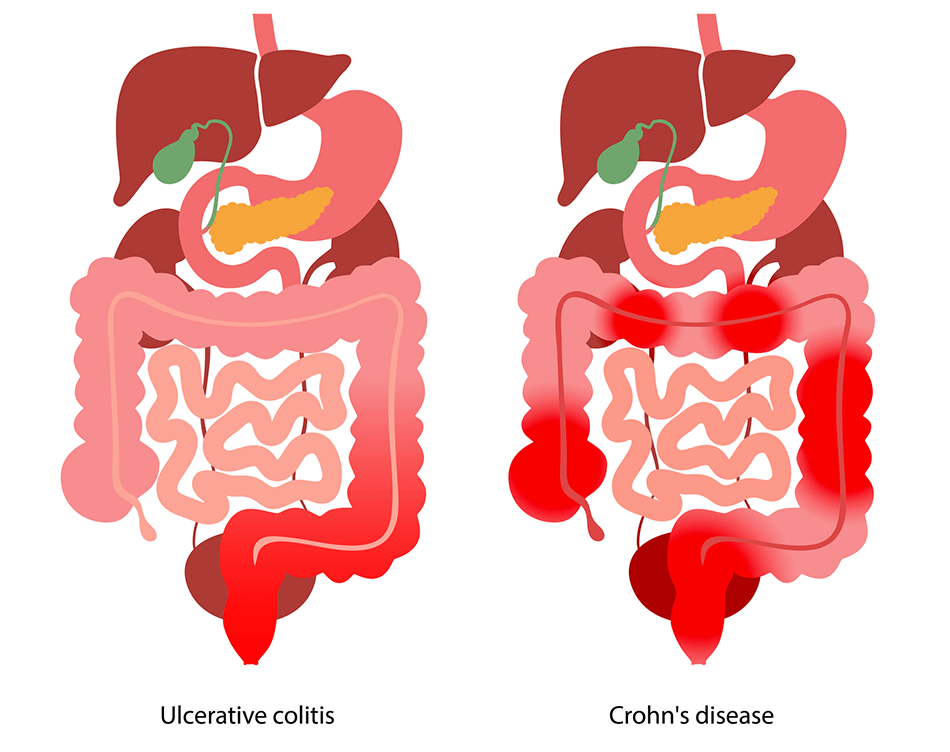
Crohn’s Disease vs. Ulcerative Colitis
Crohn's disease:
can affect any part of the digestive tract (mouth to anus)
inflammation appears in patches (healthy sections of the intestine between the inflamed areas)
can affect all layers of the bowel walls
Ulcerative colitis:
only affects the colon and rectum
continuous inflammation of the colon
only affects the innermost lining of the colon
Treatment
Because IBD is a chronic disease, there is no cure. However, treatments such as steroids, antibiotics, and surgery can help manage inflammation.
Sources: