

Rotationplasty, also called Van Nes rotationplasty, is a rarely done surgical procedure in which the bottom of the femur (thigh bone), the knee, and the upper tibia (shin bone) are amputated.
The rest of the tibia is then attached to the femur. The tibia is rotated 180° so that the heel of the foot faces forward, hence the name ‘rotationplasty’.
This allows the heel to act as the “knee”, so when the patient uses a prosthetic lower leg, both legs have the ability to bend and walk.
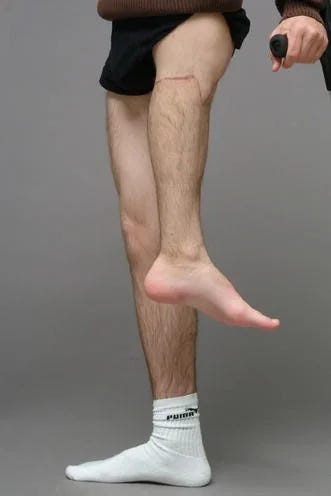
Purpose of Rotationplasty
Rotationplasty is mainly used for children who are still growing, because as the child’s bones continue growing, their prosthetic leg can be adjusted to fit them.
The most common reasons for rotationplasty are bone cancer and tumors. Rotationplasty is a good alternative to amputation because individuals have more mobility, such as the ability to run and jump.
Sources: